
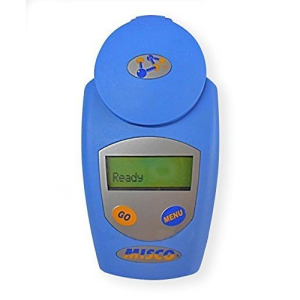
Buy Refractometers for Lab, Industrial and Field Testing
Find digital refractometers, handheld refractometers, Abbe refractometers and application-specific refractometer models at Selectum Store Corp. Refractometers are used to measure refractive index, Brix, concentration, freeze point, salinity, moisture content and other sample-specific values. This category includes models for food and beverage testing, dairy and colostrum checks, antifreeze and heat transfer fluids, brake fluid, battery acid, DEF, honey, maple syrup, salinity, metalworking fluids, fire protection foam, chemical solutions, medical and veterinary applications, and other measurement needs. Products are available from brands such as Misco, PCE Instruments, Vee Gee Scientific, Azzota, HM Digital, Insize and General Tools. Explore the catalog to find a refractometer that matches your sample type, measurement scale and required range.
Applications and Uses for Refractometers
Refractometers support quick measurement of liquid or semi-liquid samples across laboratory, industrial, food, beverage, maintenance, agricultural and field testing applications. Common uses include Brix testing, refractive index measurement, glycol and glycerine freeze point checks, brake fluid water content, battery acid specific gravity, honey moisture, dairy colostrum quality, salinity and seawater testing, metalworking coolant concentration, beer, wine and grape must monitoring, maple syrup testing and urine hydration checks. Because each refractometer is built around specific scales and ranges, the product should be selected according to the sample and test method rather than by instrument type alone. For solids and building materials rather than liquids, Selectum carries moisture meters in a separate category.
Products in this category
This category offers a range of refractometer options for different measurement needs:
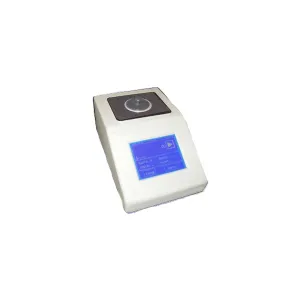
- Digital refractometers for Brix, refractive index, glycol, glycerine, brake fluid, DEF, battery acid and other application-specific scales
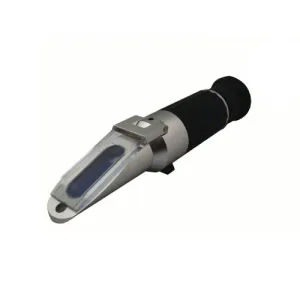
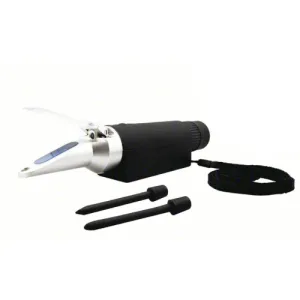
- Handheld Brix refractometers for routine sugar concentration checks in food, beverage and related applications
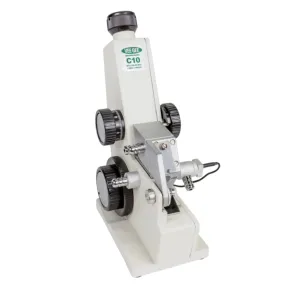
- Abbe refractometers, including digital and monocular models, for refractive index and Brix measurement in laboratory settings
- Specialty refractometers for honey, dairy, colostrum, blood serum total protein, salinity, seawater, urine hydration, maple syrup, beer, wine and chemical solutions
- Multi-scale models combining Brix, refractive index, percent volume and freeze point readings on a single instrument
- Models with different measurement ranges, scales, resolutions and automatic temperature compensation
- Products from Misco, PCE Instruments, Vee Gee Scientific, Azzota, HM Digital, Insize, General Tools and other available manufacturers
Refractometer types and performance
Performance depends on the refractometer type, measurement scale, sample range, resolution, calibration method and operating conditions. Digital refractometers may provide direct readings for specific scales such as Brix, refractive index, freeze point, percent concentration, specific gravity or moisture content, while handheld optical models are often used for quick routine checks. Abbe refractometers are commonly selected for broader laboratory refractive index and Brix measurements, with ranges such as 1.3000 to 1.7200 nD and 0 to 95% Brix. Review the product specifications carefully to confirm the measurement range, scale, accuracy, automatic temperature compensation and sample compatibility before ordering.
Specifications and selection guide
Choosing the right refractometer starts with the sample you need to measure. Confirm whether you need Brix, refractive index, salinity, freeze point, moisture content, specific gravity, percent concentration or another scale. Then check the required measurement range, resolution, accuracy, temperature compensation, digital or optical reading style, calibration requirements and sample type. Since this category includes a broad selection of refractometers across multiple pages, filtering by brand, application, scale and measurement range can help narrow the selection.
Complete your setup
Pair the instrument with compatible calibration solutions, sample handling supplies, cleaning materials, pipettes and lab wipes, since proper preparation and calibration help maintain reliable readings when switching between sample types or concentration ranges. For dissolved solids and water conductivity testing alongside salinity work, Selectum also stocks TDS meters.
Why shop Refractometers at Selectum Store Corp
Selectum carries digital, handheld, Abbe and application-specific refractometers from seven manufacturers, with the Misco PA200 and PA202 series covering scales from honey moisture and colostrum protein to glycol freeze point and sulfuric acid specific gravity. Products can be filtered by application, brand, scale and range, and orders include listed pricing and free shipping on qualifying items.
Frequently Asked Questions
How do I choose the right refractometer for my sample?
Start by identifying what you need to measure, such as Brix, refractive index, salinity, freeze point, moisture content, specific gravity or concentration. Then match the refractometer to the sample type and required measurement range. A model designed for honey, glycol, brake fluid or seawater may not be suitable for a different application unless the needed scale and range are listed in the specifications.
What is the difference between a Brix refractometer and a refractive index refractometer?
A Brix refractometer measures sugar concentration or soluble solids on a Brix scale, which is useful for many food and beverage applications. A refractive index refractometer measures how light bends through a sample and may be used in broader laboratory or chemical testing. Some digital and Abbe refractometers include both Brix and refractive index scales.
Should I choose a digital or handheld optical refractometer?
A digital refractometer can be easier to read and may include application-specific scales, automatic temperature compensation or direct digital results. A handheld optical refractometer is often useful for quick routine checks and field use. The better choice depends on your sample type, required accuracy, measurement range, budget and how often the instrument will be used.
Do refractometers need calibration?
Many refractometers require calibration or verification before use, especially when accuracy is important or when the instrument is used with different sample types. Check the product manual for the recommended calibration method, calibration solution and cleaning steps. Proper calibration and cleaning help reduce reading errors.