
Fire Safety Signs for Equipment, Exits and Alarms
Fire safety signs show people where to find extinguishers, alarms, hose stations and exits, and warn them away from flammable and no-smoking areas. This category covers extinguisher, fire equipment, alarm, exit and fire door signs, sprinkler and riser markers, fire department connection and fire lane signs, and flammable-material warnings in plastic, aluminum, adhesive vinyl and glow-in-the-dark photoluminescent versions, from Accuform, Brady, INCOM and other manufacturers. Choose the message for each location first, then the material.
Fire Extinguisher Sign Applications
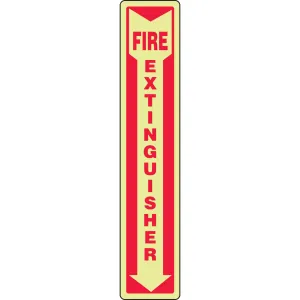
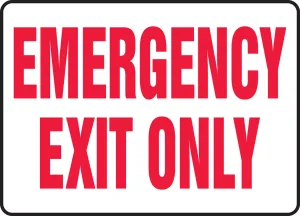
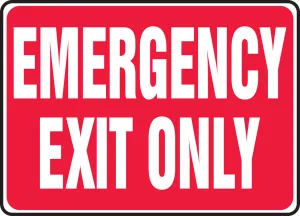
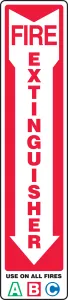
A fire extinguisher sign marks the extinguisher location so it can be found quickly when racking, machinery or people block the unit from view. Signs mounted high or at a right angle to the wall extend the message down long aisles. Facilities also mark alarm pull stations, hose cabinets, fire blankets, sprinkler control valves and fire department connections so responders reach them without searching, and for wayfinding to the nearest way out they use dedicated exit signs.
Fire Sign Messages
Fire safety signs fall into a few message groups, each answering a different question in an emergency.
- Fire equipment signs: identify extinguishers, hose reels, blankets and alarm points with a red symbol and short text.
- Exit and fire door signs: mark escape routes and doors that must stay closed to slow the spread of smoke.
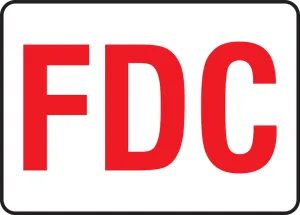
- Fire protection system markers: label sprinkler valves, risers, standpipes and fire department connections for responders, and mark fire lanes that must stay clear.
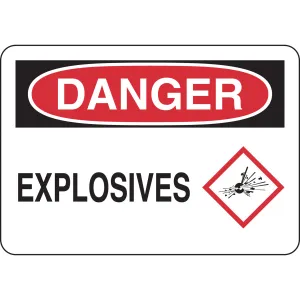
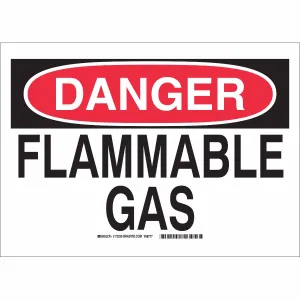
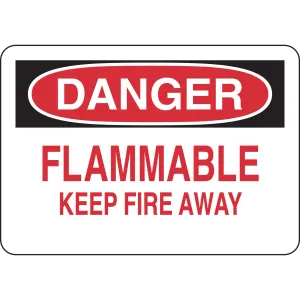
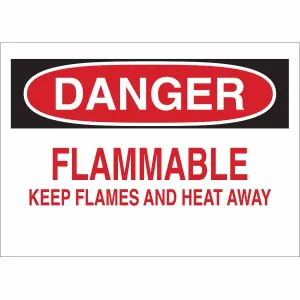
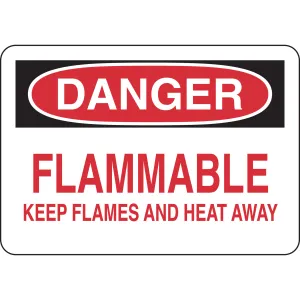
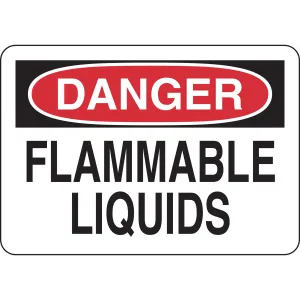
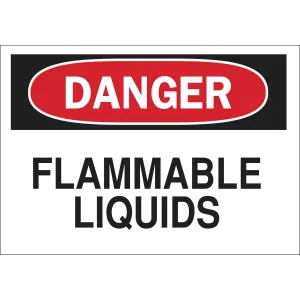
- Flammable and no-smoking signs: warn about ignition sources near fuel, solvent and gas storage.
Choosing the Sign Material
The material of fire safety signs follows the mounting surface and the environment. Rigid plastic is light and suits most indoor walls; aluminum resists impact, heat and outdoor weather; adhesive vinyl applies to doors, cabinets and curved equipment where drilling is not an option. In kitchens, washdown areas and chemical storage, choose faces that tolerate cleaning agents. Photoluminescent material glows in the dark and keeps key messages visible during a power loss, but it needs regular exposure to light to recharge, so it belongs where normal lighting reaches the sign.
How to Choose Fire Safety Signs
Plan the signs location by location and check each of these points.
- Message and symbol for the equipment or route at that spot.
- Viewing distance, which sets the sign size.
- Material for indoor, outdoor or washdown locations.
- Mounting method: screw holes, adhesive backing or standoffs.
- Consistency with signs already installed on site.
Why Buy Fire Safety Signs from Selectum Store Corp
Selectum Store Corp carries Accuform, Brady, INCOM and NMC signs for extinguishers, exits, alarms, fire doors and FDC inlets in plastic, aluminum and adhesive vinyl, including glow-in-the-dark and bilingual English-Spanish versions. Each product name starts with the manufacturer part number, so a damaged sign can be replaced with the same design. Free shipping is marked on qualifying items.
Frequently Asked Questions
What are the five types of fire signs?
The five types often quoted (prohibition, warning, mandatory, safe condition and fire equipment signs) are the general safety sign categories of European and ISO practice, not a fire-sign classification. In the US, fire signs are usually grouped by purpose instead: fire equipment location, exit and egress, alarm and fire door signs, and hazard signs for flammable materials and smoking. Hazard warnings elsewhere on site often use ANSI signal-word signs.
What are the requirements for fire safety signs?
Specific requirements come from the local fire code, the authority having jurisdiction and your facility's fire safety plan, so confirm them there. In practice, signs should be visible from the approach, high-contrast, consistent in style and kept free of dirt and damage. Coordinate them with the rest of your safety signs so messages do not conflict.
What fire signs are mandatory?
That depends on the occupancy, the building layout and the codes adopted where the facility is located, and the fire marshal or authority having jurisdiction makes the final call. Exit routes, extinguisher locations, alarm stations and fire doors are the points most often marked. A fire risk assessment or code review shows what your site needs.
Where to put fire signs?
Mount fire safety signs for equipment directly above or beside the item they identify, high enough to be seen over people, vehicles and stored goods. Place route signs at doors, stair entries and every point where the path changes direction, and repeat them along long corridors. Keep each sign clear of doors that swing over it and of lights that cause glare.